AN AUTOMATED DIGITAL SIGNAGE SYSTEM WITH HEADLESS CMS FOR TARGETED COMMUNICATION AT HAMBURGER SPARKASSE (HASPA)
Starting in 2017, all branches of the Hamburger Sparkasse were updated to make them more modern and digital. As part of this renovation, a new communication strategy was developed to connect the digital with the brick-and-mortar worlds of banking. The aim was to use modern communication concepts to strengthen and promote the digitalisation of the Hamburger Sparkasse while also strengthening local ties with customers.
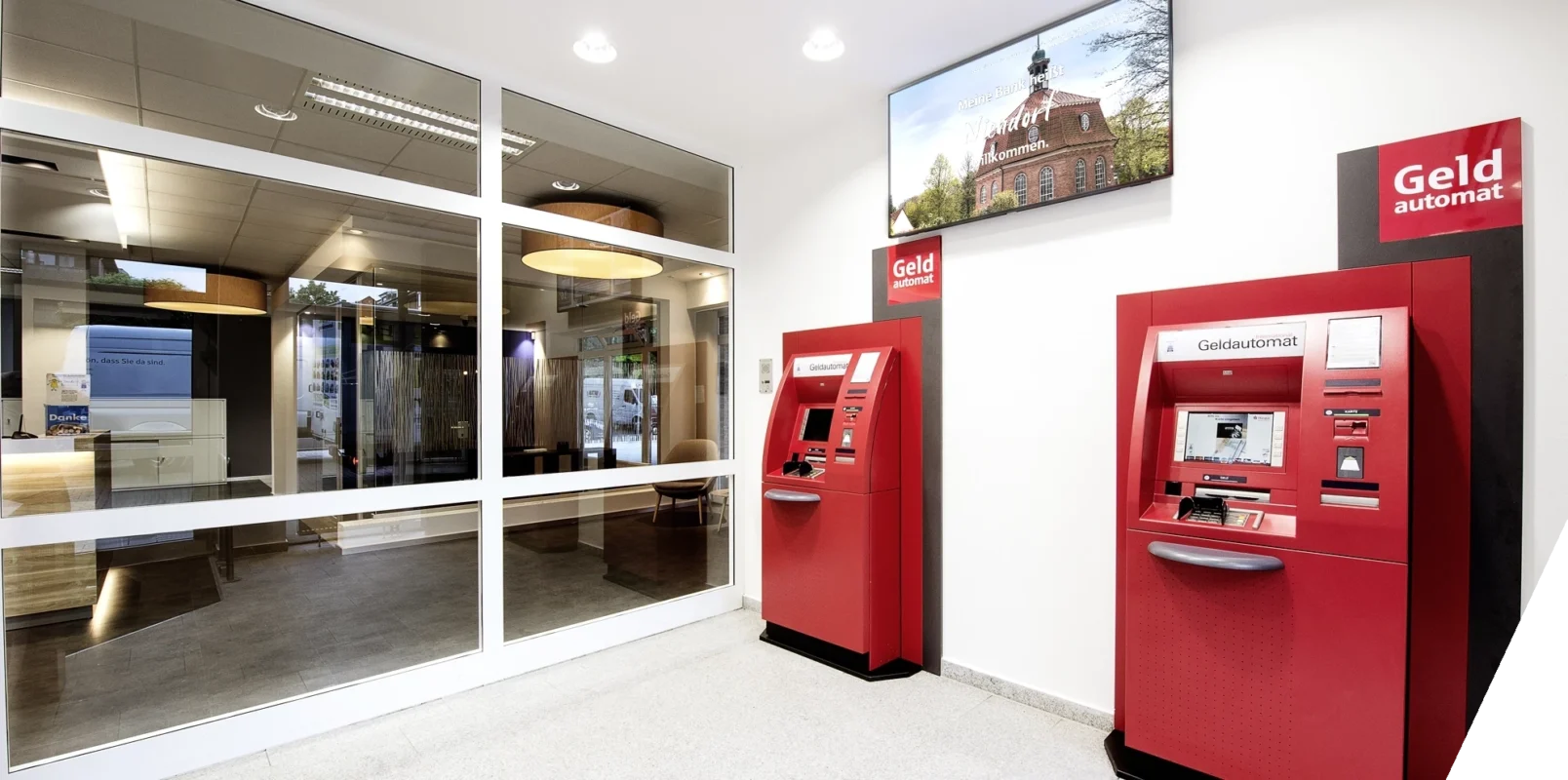
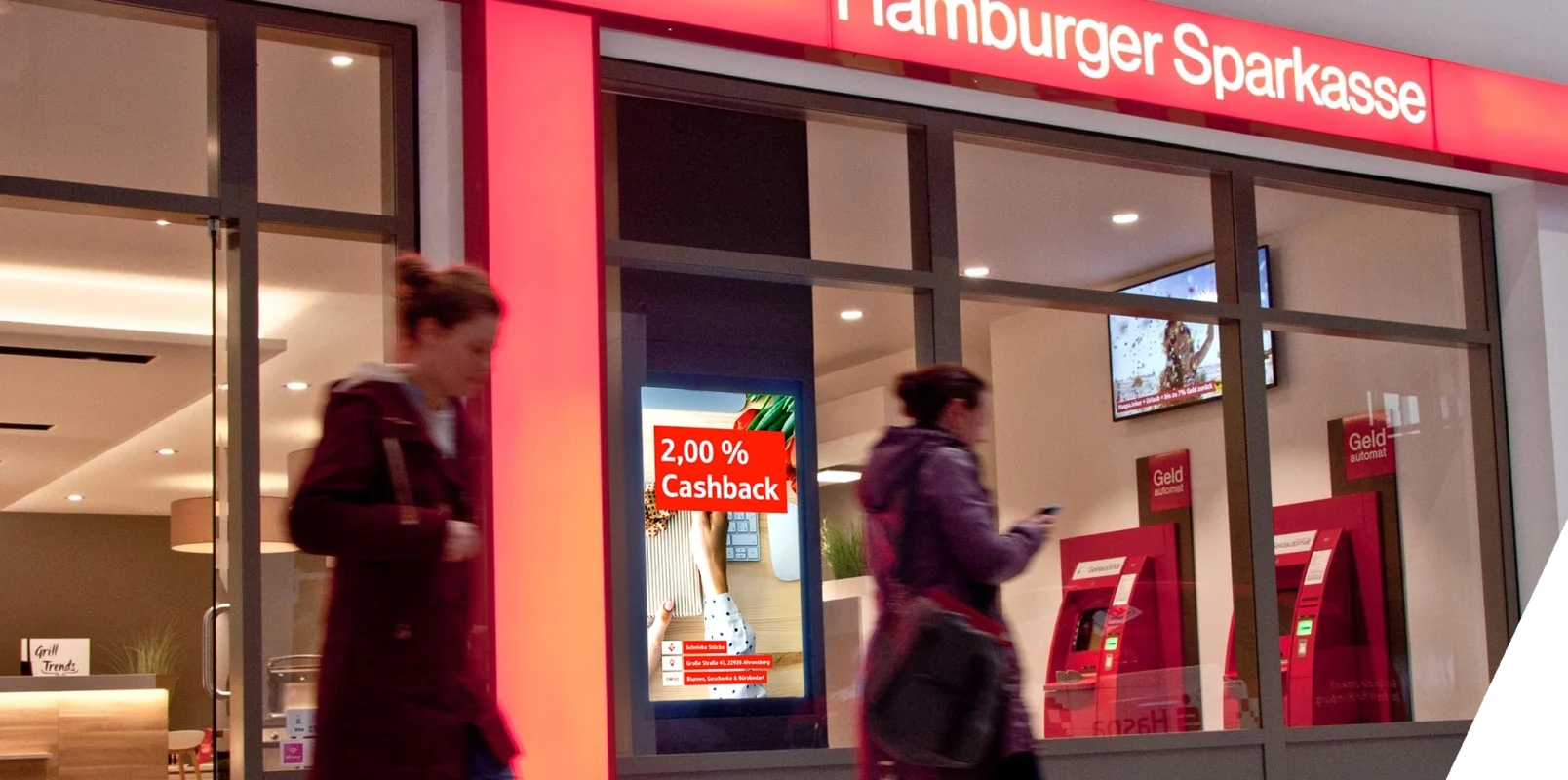
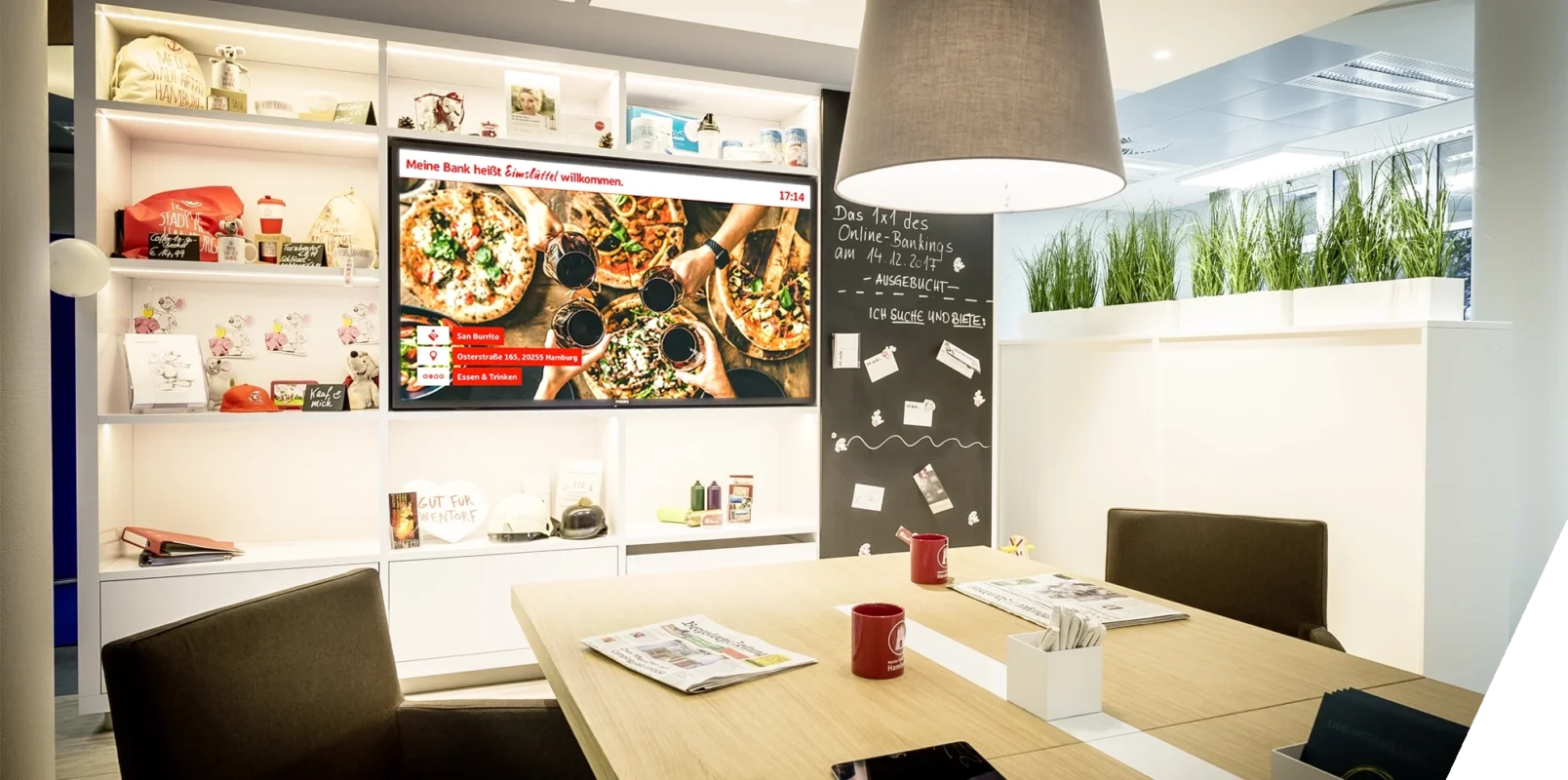
The standard digital signage setup in a branch consists of three touchpoints: a high-brightness screen in the shop window for external communication, a screen in the ATM area of the branch for communication with customers who are in the branch for a short time, and an interactive, touch-enabled 75″ screen inside the branch. All screens have been integrated into the interior design of the new branch concept and some have been combined with additional technical features such as sound systems and presentation interfaces.
The digital screen solutions developed by pilot Screentime have been integrated into over 100 branches and have been in operation in all branches of Hamburger Sparkasse since 2020.
The system’s content is fully automated and branded to the location or district of the respective branch. Content comes from three different sources and is also automatically compiled into a varied playlist tailored to the specific touchpoint.
Content can be set centrally by the marketing department at Haspa headquarters, by branch employees or generated via live feeds.
pilot Screentime has developed a central content management system for this purpose that is tailored to the individual needs of customers. This system is constantly being further developed and has grown over the years. It presently incorporates the every-growing Event Calendar.
HASPA EVENT CALENDAR: DIGITAL EVENTS AND POI NETWORK
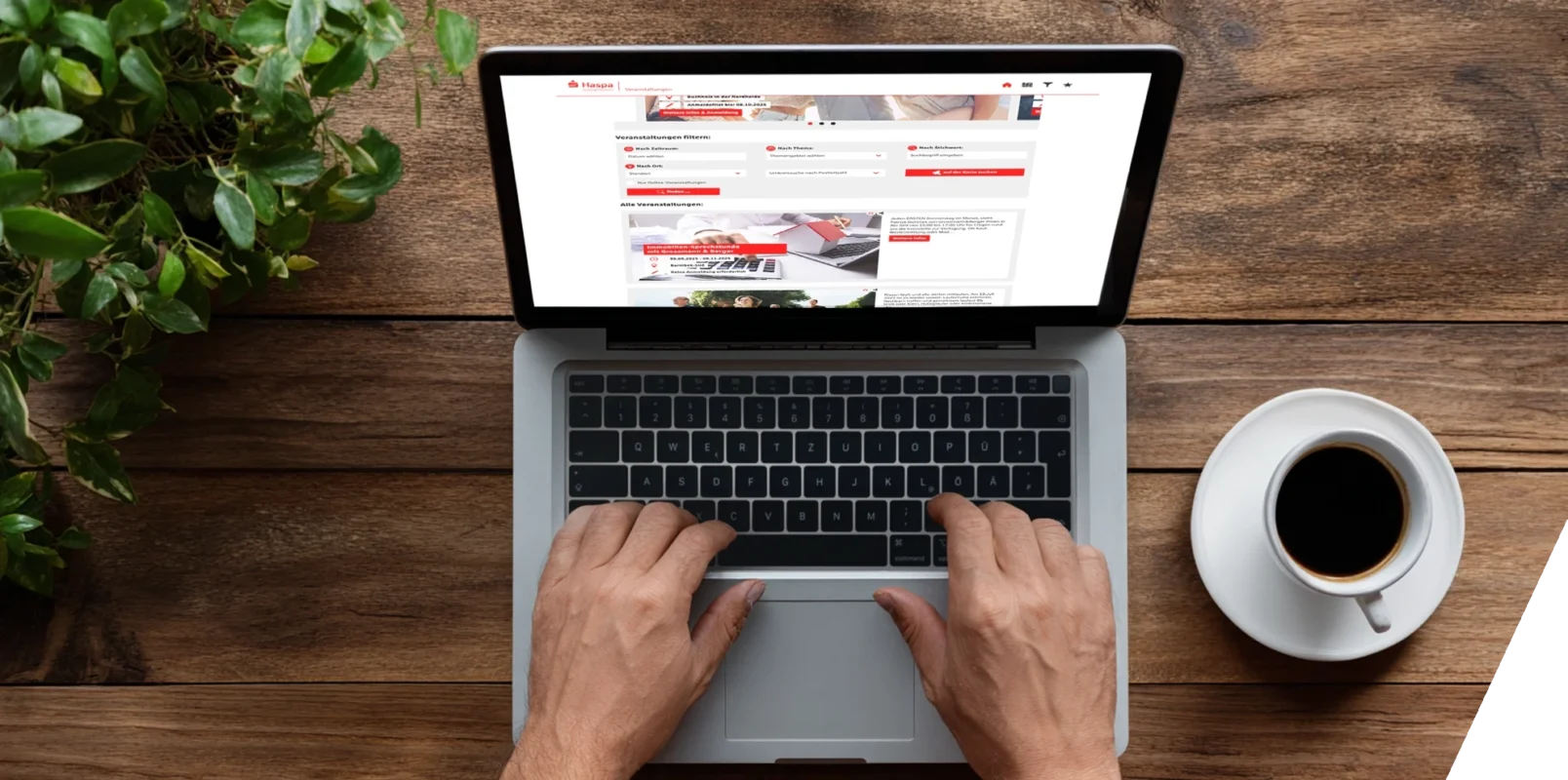
In 2018, Pilot Screentime launched an event calendar for Hamburger Sparkasse. At www.haspa-veranstaltungen.de, customers can view, filter and register events at all Haspa branches. At the same time, the content management system was expanded to include functions that allow Haspa employees to organise their own online or in-person events, as well as events in the neighbourhood (e.g. by partners). In addition, Haspa’s central marketing department can create large-scale online seminars (such as lecture series or panel discussions).
An intuitive input mask allows event formats to be created, organised, advertised and tracked. With just a few clicks, events can be advertised on branch screens, the event website and on social media. Employees can also handle all participant management in the system, including invitations, reminders, participant limits, name tag creation and subsequent evaluation of the event – whether by participants or employees.
Successful event formats can also be used as templates for other branches, making it even easier to organise successful events. The classic digital signage system is also integrated into the event management process. The striking 75-inch touchscreen at the heart of the branch becomes a presentation area, gaming device or atmospheric sound control.
Panik City
PANIK CITY | FROM IDEA TO OPERATION: OUR MULTIMEDIA EXPERIENCE WITH UDO LINDENBERG
Udo Lindenberg is an extraordinary German musician, artist and writer and he is internationally renowned as a living rock legend. His musical career began in the late 1970s. To date, his entire oeuvre has received numerous awards. There has been a successful musical ‘Hinterm Horizont’ based on his life and he is also a prolific painter with enormous commercial successful. His history is closely associated with Hamburg’s Reeperbahn. So it was only natural that this famous street should become the multimedia home of the legendary rocker. Located in the heart of Hamburg, visitors to the “Panik City -The Udo Lindenberg Experience” are offered a unique cultural experience: a location based experience that has become an industry bench-mark in interactive storytelling.
INNOVATIVE TECHNOLOGIES
The use of innovative and groundbreaking technology plays a significant role in the overall success of Panik City.
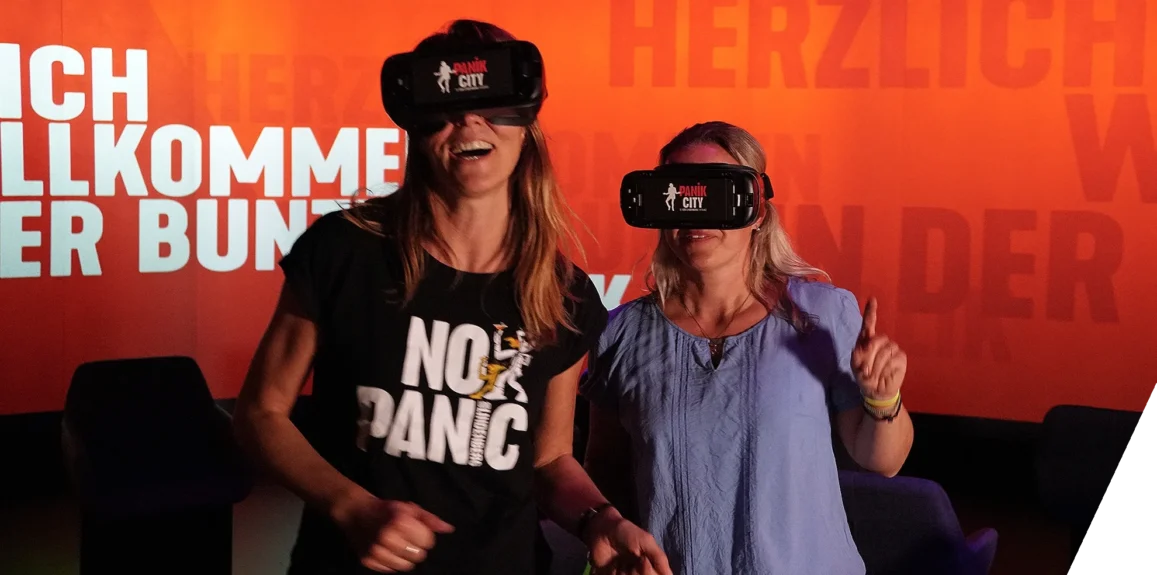
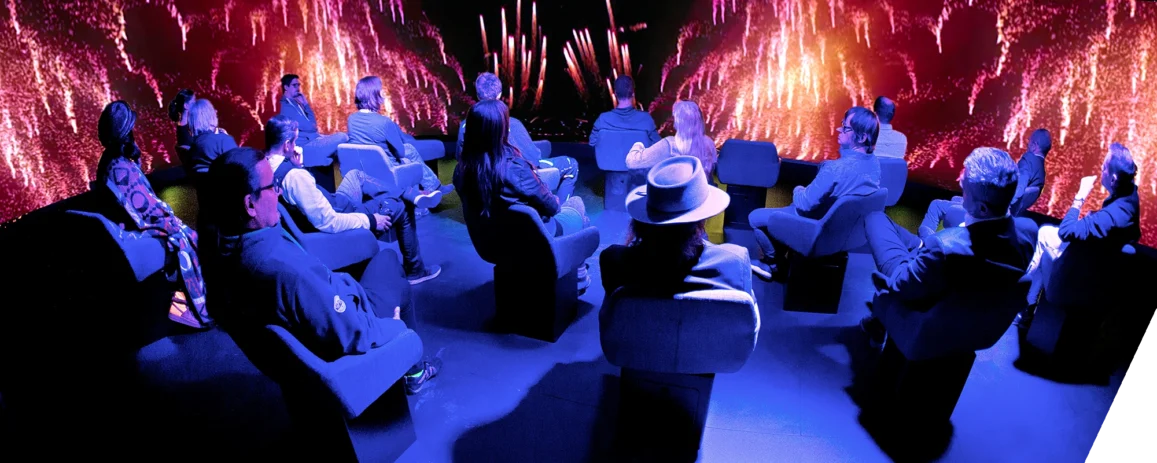
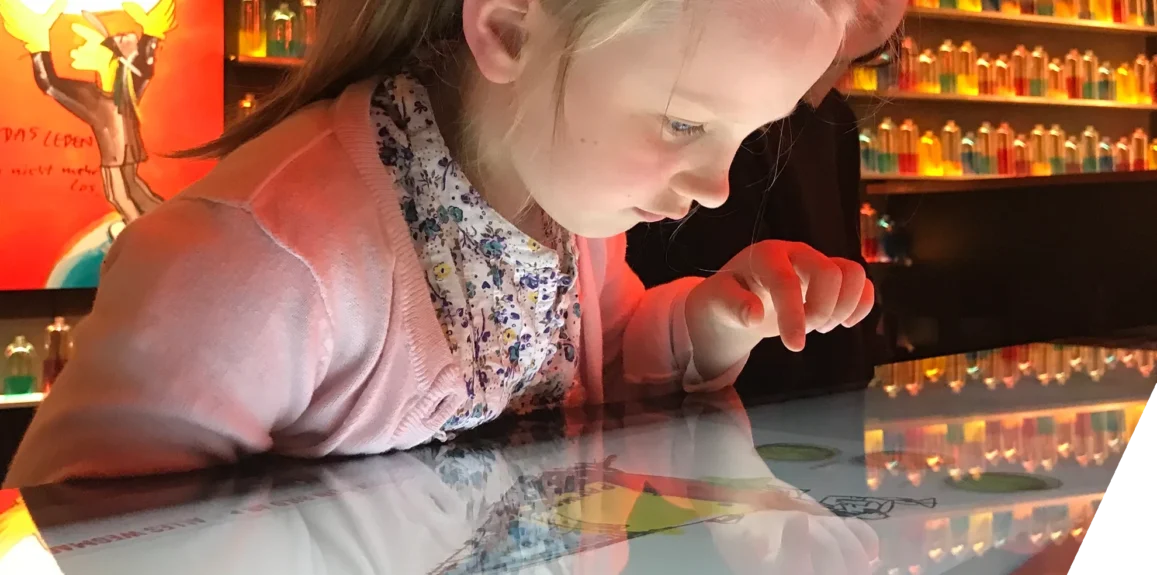
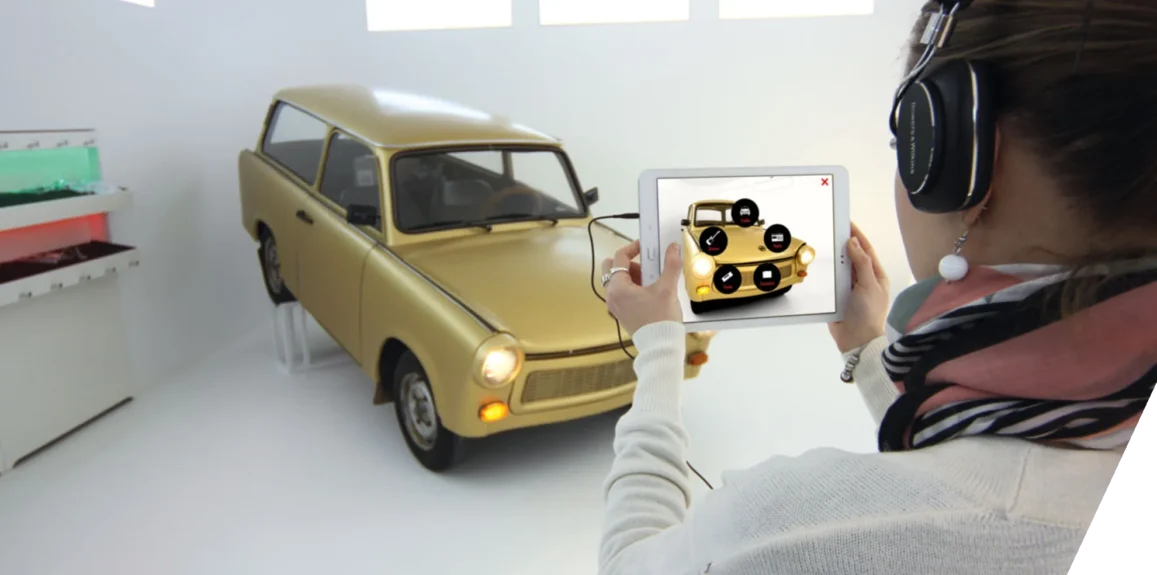
The digital experience specialists at pilot Screentime have created a world covering approx. 700 square metres that brings Udo Lindenberg’s musical, artistic and political work to life in a multimedia and multi-sensory experience. The technical set-up includes floor-to-ceiling panoramic video walls, LED screens, tablets and interactive applications, as well as a sophisticated audio and video system.
Visitors experience unique art objects, a virtual concert and can record their own song together with the music legend.
The technologies used for the live experience surprise, entertain and involve the exhibition guests – allowing visitors an intimate insight into the musician, artist and person – Udo Lindenberg.
INTERACTIVE STORYTELLING
A virtual Udo Lindenberg accompanies visitors on their tour through the Panik City. Guests are immersed in Udo Lindenberg’s past and become part of it themselves. New content was produced especially for this extraordinary journey through time.
Among other things, the moving image experts at pilot worked with Udo Lindenberg and other contemporary witnesses in his hometown of Gronau to shoot real and fictional film footage. This was then combined with archive material to create a completely new and immersive experience for visitors.
VISITORS TO PANIK CITY TAKE A JOURNEY BACK IN TIME TO THE GDR WITH UDO LINDENBERG.
Want to stand on stage with Udo Lindenberg? You can at Panik City.
Visitors to the Panik City do not feel like they are in a classic museum, where guests walk from room to room and look at artefacts. At Panik City, they are immersed in the world of Udo Lindenberg for around 90 minutes without interruption. To make this non-stop experience possible, a completely new visitor management concept was developed for the Panik City. Access to the various areas of Panik City is controlled by an RFID technology that monitors the technical and timing setup. Tour guides accompany guests, monitor the process and thus ensure a holistic multimedia experience.
This brings visitors very close to Udo Lindenberg. They can stand alongside the rock musician on his concert stage or in his recording studio, ‘Boogie Park’. They experience him during the GDR era and gain insights into his secret Stasi files. They also get to meet real-life witnesses and companions and paint one of his famous ‘Likörelle’ pictures themselves. The interactive storytelling engages visitors emotionally to such an extent that Udo Lindenberg becomes a life-like guide for them. But that’s not all: guests can take home a bit of their experience to share with their friends and family. For example, they can download the song recorded with Udo Lindenberg in his recording studio and digital “Likörelle” paintings can be sent via by email. Panik City thus creates a long-lasting brand experience that goes beyond the live experience.
BLUEPRINT FOR BRAND COMMUNICATION
Udo Lindenberg’s Panik City is a multimedia brand experience that serves as a blueprint for innovative brand communication in many ways. People are interested in stories and remember them when they are well told.
This also applies to brand communication. Interactive elements reinforce this effect, creating completely new brand experiences. Interactive storytelling can be an effective way to reach consumers emotionally, build closeness and anchor a positive brand perception in the long term. The multimedia concept behind Panik City focuses on participation. This kind of multimedia experience can create completely new touchpoints for connecting with existing and potential consumers and getting them excited about a brand’s products, services or content.
Those who experiment with new technologies such as VR or AR at an early stage and use them effectively also secure a knowledge advantage over the competition. In times of fragmented media usage and declining reach, brand managers can thus connect with people who would be difficult or impossible to reach through conventional advertising or communication channels.
These previously untapped target groups can be brought closer to brands through a positive live experience, and in some cases convinced and even turned into multipliers.
The magic of LED Wall technologies – an overview
The magic of LED Wall technologies – an overview
13.06.2025
Join us as we dive into the fascinating world of LED technologies that are revolutionising our visual experiences. Whether indoors or outdoors, the right LED technology is crucial for successfully transforming any environment into an impressive visual space. From the brilliant colour accuracy of indoor MicroLEDs to the robust durability of DIP LEDs for outdoor use, each technology has its own unique strengths. Discover how these technologies are redefining the limits of content and advertising in our public spaces and what role pixel pitch plays in this. In this article, we present the most important LED technologies for video walls and discuss what to look for when buying your own solution.
Indoors vs. outdoors
The right LED wall technology for impressive visual experiences
In the world of LED video wall technologies, there are clear differences between solutions for indoor and outdoor use. SMD LEDs (surface-mounted devices) are the undisputed favourite for indoor applications. With their ability to deliver brilliant colours, high image sharpness and extremely small pixel pitches, they are perfect for high-resolution, detailed content. The wide viewing angle ensures that audiences can enjoy the content from different perspectives. However, this technology comes at a price: SMD LEDs are relatively expensive to purchase and require careful installation and maintenance.
In contrast, DIP (Dual In-Line Package) LEDs are the robust choice for outdoor use. Their resistance to environmental influences and high brightness make them ideal for outdoor use, even in direct sunlight. However, they cannot quite match SMD LEDs in terms of image quality and colour fidelity. The larger pixel pitch makes them more suitable for large-scale installations where viewers are further away.
Pixel pitch
Best image quality at any distance
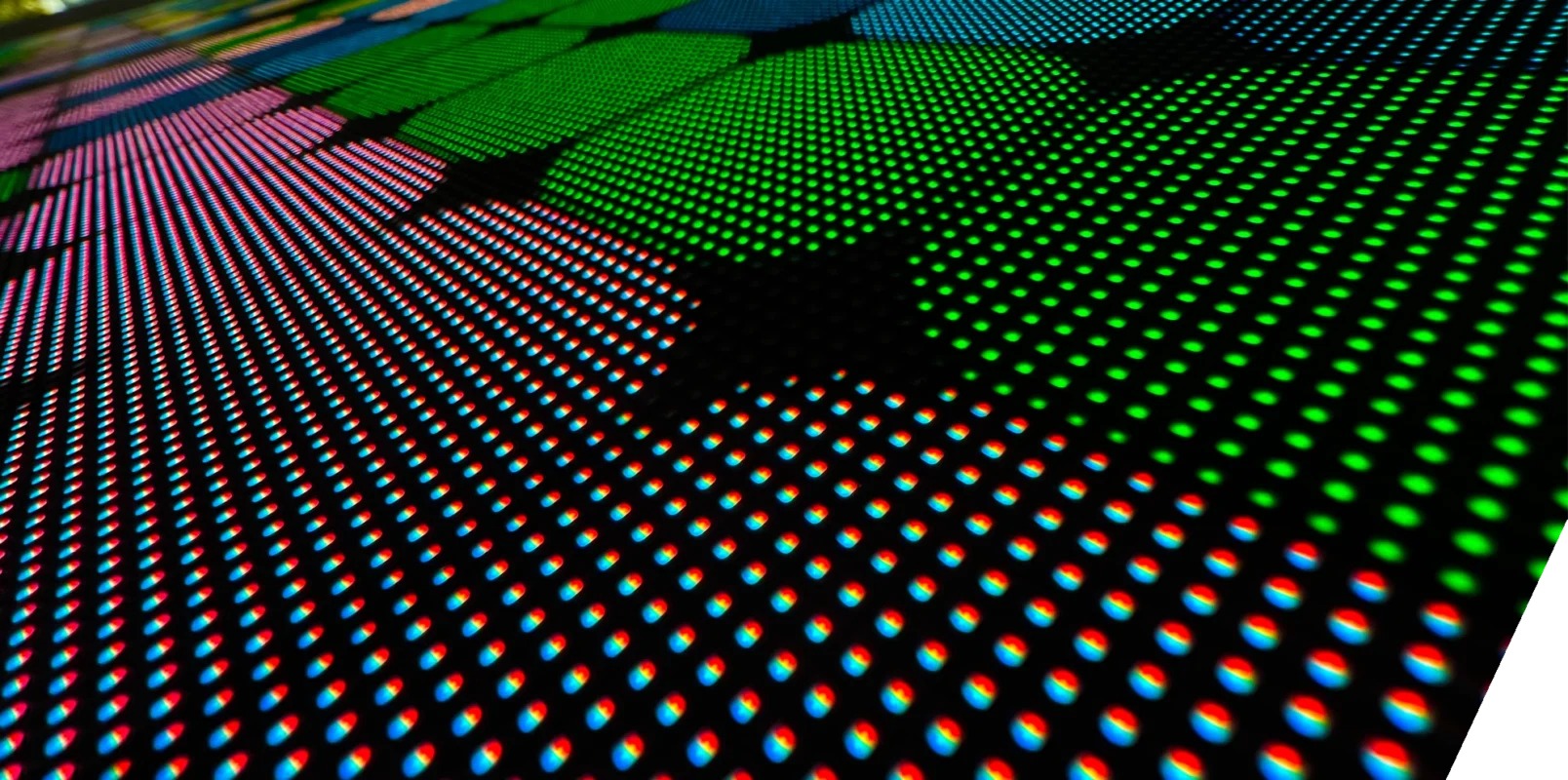
In the world of LED video walls, “pixel pitch“ plays a crucial role in determining image quality. This term describes the distance between the centres of adjacent pixels and has a significant impact on the picture resolution of a video wall. Choosing the right pixel pitch is essential to ensure that the display is optimally suited to the environment and viewing distance.
A smaller pixel pitch ensures sharper and more detailed images, which are particularly suitable for installations where the viewer is close to the LED wall. Typical pixel pitch sizes for indoor screens are between 0,7mm – 5mm. This fine resolution is ideal for indoor spaces or locations where viewers experience the content at close range. Larger pixel pitches, on the other hand, are perfect for expansive outdoor installations where viewers are farther away. Typical pixel pitches for outdoor screens are between 5-20mm. Considering the viewing distance is crucial to achieving the maximum impact of a video wall. Whether for an intimate gallery or a sprawling stadium, the right pixel pitch makes all the difference and ensures that content is always presented in the best quality.
Transparent mesh screens
Mesh screens are typically semi-transparent with a pixel pitch of between 8-60mm. The lower the pixel pitch the more light can fall through the screen increasing the transparency. The level of transparency will change for a mesh screen depending on the pixel pitch. A screen with a 8mm pixel pitch would typically have a transparency of approximately 50%. In some cases the pixel pitch is non-symetrical, meaning the pixel pitch in the vertical can be different to that in the horizontal. In this case 10mm in the vertical and 28mm in the horizontal could be possible configuration.
Brightness
The importance of the right brightness
The brightness or luminosity of an LED wall is a decisive factor in its performance and is measured in candelas or nits. One nit represents one candela per square meter (cd/m²). Outdoor LED walls in particular must achieve high brightness values so that content remains clear and visible even in direct sunlight. Typical values for outdoor LED walls are between maximum 6000-8000 cd/m². Indoor screens on the other hand will be less bright. Maximum values between 500-1500 cd/m² are more common. But it’s not just about maximum luminosity; a balance between brightness and energy efficiency is equally important to avoid unnecessary energy consumption and protect the environment.
Modern LED walls have a clever trick up their sleeve: the auto-dimming function. This smart technology automatically adjusts the brightness of the LED wall to match ambient light conditions, ensuring that visibility remains consistently good. At the same time, energy efficiency is improved, which not only reduces power consumption but also extends the service life of the LEDs. Auto-dimming makes LED walls not only smarter but also more sustainable and cost-efficient – a real win for any application. An outdoor LED wall will be typically dimmed to about 5% of its maximum brightness at nighttime to ensure the screen does not appear too bright in relation to its environment.
MicroLED
The future of display technology
MicroLED technology is at the dawn of a revolutionary change in the world of displays. With its ability to offer extremely high resolutions combined with impressive energy efficiency and exceptional durability, it promises a huge leap forward in innovation. The image quality of MicroLEDs impresses with high brightness and excellent colour accuracy, making them the ideal choice for demanding visual experiences.
Currently, microLEDs are mainly suitable for high-end installations in the premium segment due to their complex manufacturing and high costs. A microLED pixel can be as small as 5 μm across but the majority of present manufacturers tend to use the term microLED if the pixel pitch is less than 3mm, as in the case of Samsung’s “The Wall” product. The technology is gaining ground and will play an increasingly important role in the future. With its outstanding properties, it could fundamentally change the way we experience and use screens.
Flip-Chip-LED
High brightness applications
In the world of LED technologies, flip-chip LEDs are proving to be the optimum solution for applications that require high brightness. Their optimised thermal management, in which the chip is mounted directly on the substrate, enables efficient heat dissipation. This feature extends the service life of the LEDs and ensures consistent performance.
Thanks to their higher performance and brightness, flip-chip LEDs are ideal for demanding projects that require intense light sources. However, this technology comes with higher manufacturing costs, making it more expensive and technically challenging. Despite these challenges, flip-chip LEDs offer an impressive solution for those looking for exceptional light performance.
COB-Technologie
The compact power solution for uniform illumination
COB (chip on board) technology is revolutionising the way LED screens are designed. Mounting multiple LED chips directly onto a circuit board creates a compact design with impressive light density and particularly even illumination. This technology not only offers efficient use of space, but also outstanding light quality that is ideal for many applications.
COB LEDs are known for their energy efficiency and longevity, making them a sustainable choice. However, to realise the full potential of this technology, a sophisticated cooling system is required to prevent overheating. Compared to SMD LEDs, the pixel pitch customisation options are limited, making them less flexible for certain applications.
Despite these limitations, COB LEDs offer a compact and powerful solution for those looking for uniform and efficient illumination. Their innovative design and sustainable properties make them the perfect choice for many indoor installations.
Shader-Technologie
How protection from the elements can also improve the image
In the world of LED displays, shaders are an essential element that significantly improves performance and appearance. These components not only protect the sensitive LED pixels and internal components, but also increase image contrast, resulting in more vivid and sharper images. LED shaders act as a protective shield for the sensitive LED pixels and other internal components. They protect the displays from environmental influences such as rain, wind, snow, moisture, dirt and dust.
By blocking ambient light, shaders also create a darker background against which the LED pixels can shine. This results in a higher contrast ratio, making images appear more vivid and clearer.
There are primarily two types of shaders: module shaders that fit individually around each pixel or slats that mask one or more sides of a pixel. Both enhance contrast. Glare is also reduced because less light spills from the display. In addition, the technology’s service life is extended as protection from the elements prevents damage.
Furthermore, shaders can be used to generate focused LED light immision through asymmetrically mounted shaders that can shield light so that the LED and screen can be seen or masked from one particular viewpoint.
Conclusion:
LED video walls offer a wide range of technologies that can be used to their advantage depending on the application and requirements. When planning an LED wall, questions about the environment, the desired image quality and the budget should be asked. Whether for high-resolution indoor installations or large-scale outdoor projects, choosing the right technology is crucial for the best optimum result and should therefore be carefully considered on an individual basis.